
NEXT LEVEL RESOURCE MANAGEMENT
COMPLIANCE
A PERFORMANCE TOOL FOR BUSINESS

TRUST.
SECURITY.
RELIABILITY
Resource management isn’t just about filling slots on a schedule, it’s about proving your people are qualified to do the work. The certifications clients demand, the training regulations require, and the credentials that keep projects legal and safe. At DOK, compliance means knowing exactly who’s certified for what, when those certifications expire, and which qualified people are available when you need them.
WHY RESOURCE
COMPLIANCE
ACTUALLY MATTERS
Clients demand proof, not promises
Your clients aren’t interested in hearing “our team is highly qualified.” They want to see current CSCS cards, valid SMSTS certificates, up-to-date first aid training, and proof of professional accreditations. DOK tracks every certification your people hold, when they achieved it, and crucially, when it expires. Because the contract you just won requires three people with specific safety certifications, and you need to prove you have them before work starts.
Regulations don’t care about good intentions
Construction sites require CSCS, health and safety roles need NEBOSH, financial services demand CeMAP or CFA credentials, and every industry has its own alphabet soup of mandatory certifications. DOK helps you meet these legal requirements by tracking who’s certified for what, alerting you before credentials expire, and instantly showing which qualified people are available when a compliant resource is needed. Because “we didn’t realise their ticket had expired” won’t fly with HSE inspectors or professional regulators.


The wrong person on the wrong job creates
liability nightmares
Assigning someone without proper certifications to a job that requires them isn’t just non-compliant, it’s dangerous and potentially ruinous. If an incident occurs and investigators discover your resource lacked required qualifications, you’re facing liability claims, regulatory penalties, reputation damage, and possibly criminal charges. DOK prevents these scenarios by making compliance status visible before allocation, not discovered after something goes wrong.
Expired certifications stop projects cold
Nothing derails a project faster than discovering mid-delivery that a key resource’s certification just expired. Suddenly you’re scrambling to find a replacement, explaining delays to clients, and possibly breaching contractual commitments. DOK’s expiry tracking and automated alerts give you weeks of notice before certifications lapse, allowing proactive renewal or reallocation instead of emergency firefighting.
HOW DOK MANAGES
PEOPLE COMPLIANCE
(SO YOU DON’T HAVE TO)
Comprehensive certification tracking that actually works
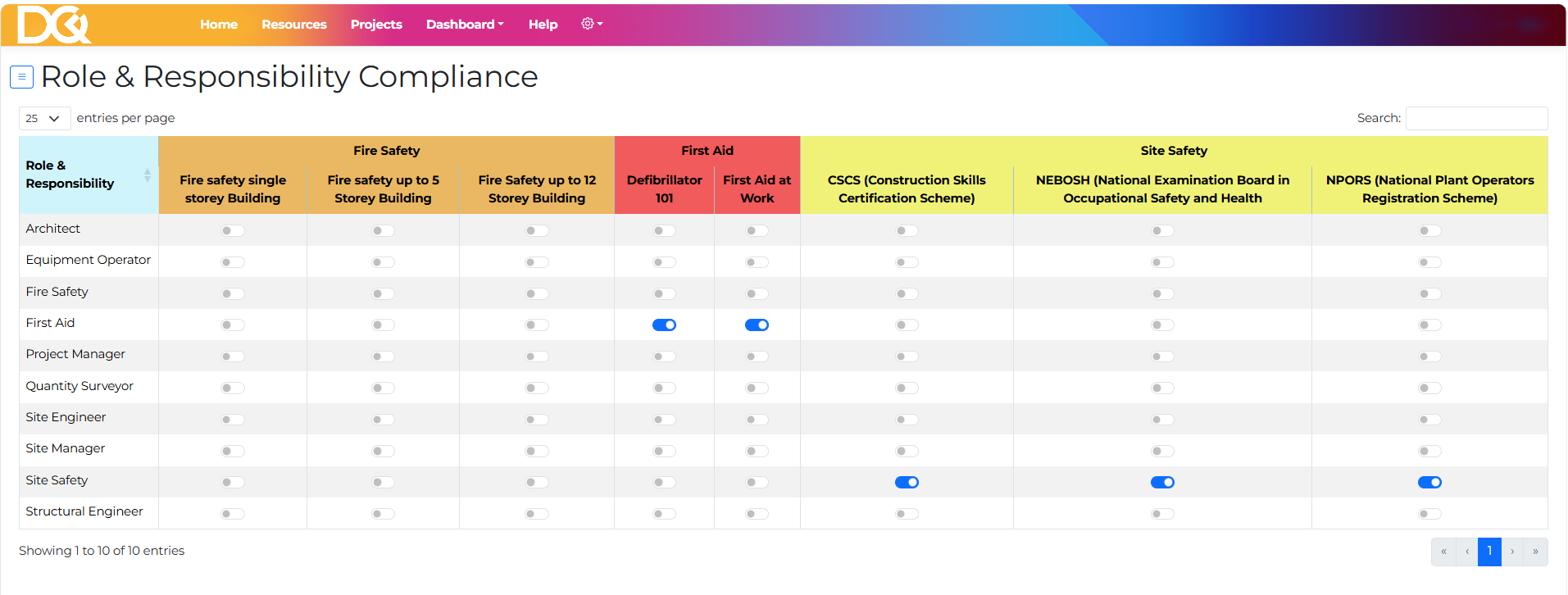
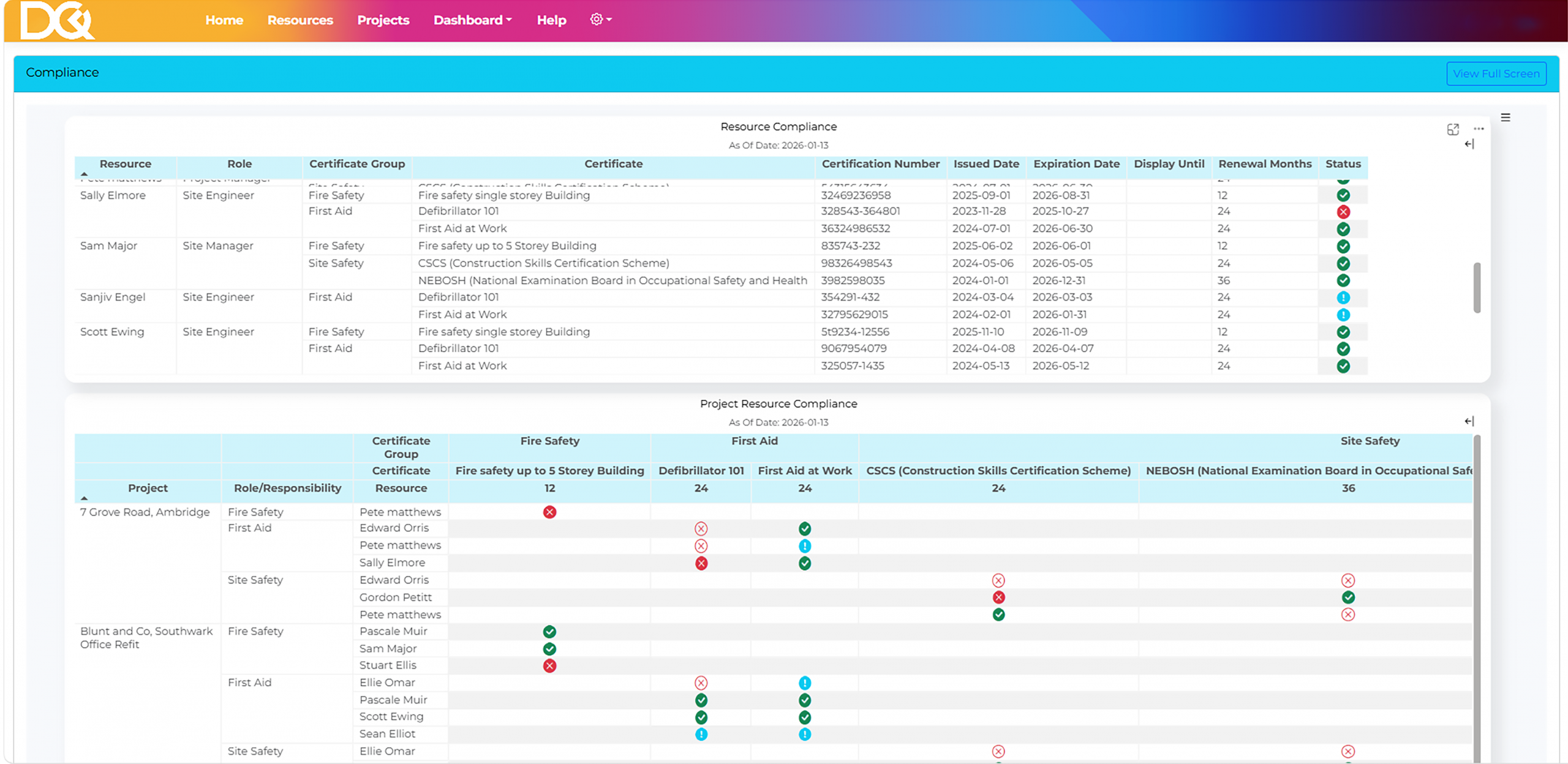
DOK maintains a complete record of every certification, training course, safety card, professional accreditation, and license your people hold. From CSCS and SMSTS to professional qualifications like PRINCE2, ACA, or industry-specific credentials, the system tracks achievement dates, expiry dates, certification numbers, and issuing bodies. This isn’t a static list, it’s a living compliance database that powers your resource allocation decisions.
Expiry alerts that prevent compliance failures
The system automatically monitors certification expiry dates and alerts you well before credentials lapse. Set notification periods that work for your business, whether that’s 90 days for critical safety certifications or 30 days for professional accreditations. You’ll know exactly who needs renewal training, which certifications are approaching expiry, and where compliance gaps are forming before they become project blockers.
Smart allocation that respects compliance requirements
When you’re allocating resources to projects, DOK shows certification status alongside availability. Need someone with a valid NEBOSH certificate for a health and safety role? The system instantly shows who’s qualified and available. Require IPAF training for elevated work? You’ll see which resources hold current credentials. This compliance-aware allocation prevents the catastrophic mistake of putting unqualified people into roles that require specific certifications.


Training needs analysis built into resource planning
DOK doesn’t just track current certifications, it identifies gaps between the credentials your people hold and the qualifications your projects require. This gap analysis reveals exactly what training investments will unlock new opportunities, which team members are ready for upskilling, and where certification bottlenecks are limiting your capacity. Strategic training becomes data-driven instead of guesswork.
Audit trails that prove compliance when it matters
Every resource allocation in DOK creates an audit record showing that the assigned person held valid certifications at the time of assignment. When clients ask for proof of compliance, when regulators conduct inspections, or when you need to demonstrate due diligence, you have timestamped evidence showing you verified credentials before allocating resources. That’s the documentation that protects your business when questions arise.
Document management for certificates and proof
DOK stores copies of actual certificates, training records, and qualification documents alongside certification records. Upload CSCS cards, safety training certificates, professional accreditations, and license documents directly into each person’s profile. When a client requests proof of qualifications or an auditor wants to verify credentials, you can produce the actual documentation immediately, not spend days hunting through filing cabinets or email archives.
DOK SOLVES REAL-
WORLD COMPLIANCE
SCENARIOS
“We need someone with SMSTS for this site, who’s available?”
Instant visibility of qualified, available resources instead of spreadsheet archaeology and frantic phone calls
“Client requires proof all resources hold valid CSCS cards”
Generate compliance reports showing current certifications with document attachments for client submission
“Three people’s safety tickets expire next month”
Automated alerts trigger renewal processes before certifications lapse and create project disruption
“Can we bid this contract? It requires five people with specific qualifications”
Immediately verify if you have the certified capacity to deliver, informing bid decisions with facts
“HSE wants to inspect our compliance records”
Produce comprehensive audit trails showing certification verification at point of allocation, demonstrating due diligence
“Our insurance requires proof of professional qualifications”
Maintain current records of all professional accreditations supporting insurance requirements and policy renewals

COMPLIANCE YOU CAN
PROVE WHEN IT COUNTS
Certification tracking across all credentials
CSCS, SMSTS, NEBOSH, professional accreditations, safety training, licenses, and industry-specific qualifications
Expiry monitoring with proactive alerts
Never discover expired certifications mid-project, automated warnings give weeks of renewal notice
Compliance-aware resource allocation
Only allocate qualified people to roles requiring specific certifications, preventing regulatory breaches
Training gap analysis and planning
Identify certification gaps limiting capacity and plan strategic training investments
Audit trails proving due diligence
Timestamped records showing certification verification at point of allocation, protecting against liability claims
Document storage for certificates
Maintain copies of actual certificates, training records, and qualification documents for instant proof
GET IN TOUCH ABOUT
PEOPLE COMPLIANCE
Need to track safety certifications, manage professional qualifications, prove compliance to clients, or ensure your resource allocation meets regulatory requirements? Let’s discuss how DOK’s people compliance capabilities can eliminate certification chaos, prevent costly compliance failures, and give you confidence that every person on every job is actually qualified to be there.